⭐ 4.9/5 · Lime Mortar on Period Stacks · Free Quotes · No Call-Out Fee
Chimney Repointing in Farnham
Specialist chimney repointing and stack repairs across Farnham and Surrey — repointing, flaunching, cowls, capping and lead flashing. On Farnham’s period stacks we use lime mortar, never cement, because the wrong mortar destroys old brickwork.
Chimney repointing in Farnham costs £150–£800+ per stack depending on scope — repointing, flaunching renewal, cowls and capping. On pre-1919 properties we always use lime mortar, never cement, which spalls old brickwork. Free written quotes, no call-out fee. Call 0125 244 7622.
✓ Free Written Quotes
✓ No Call-Out Fee
✓ 10-Year Guarantee
✓ NFRC Registered
✓ Fully Insured
Chimney Repointing
Repointing, Flaunching and Why Mortar Choice Is Everything
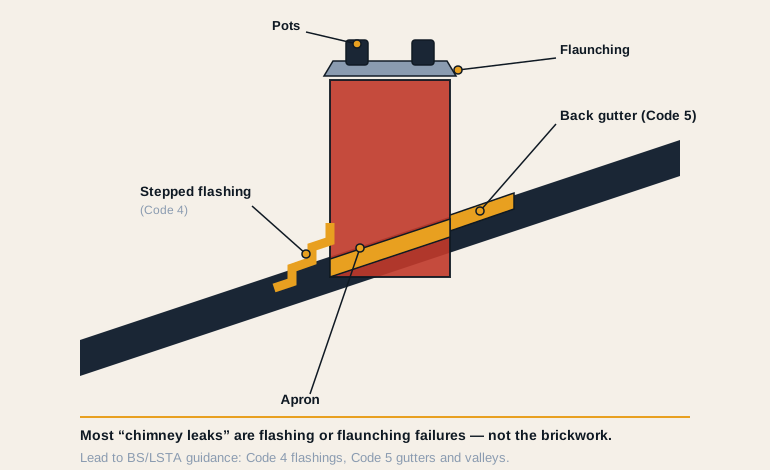
A chimney stack takes more weather than any other part of your house — exposed on all sides, high up, and the first thing the wind and rain hit. Its defences are the mortar between the bricks (the pointing), the mortar bed the pots sit in at the top (the flaunching), and the lead flashing where the stack meets the roof. When any of these fail, water gets into the stack and tracks down to appear as damp on the chimney breast inside, often in a bedroom.
Repointing — raking out the failed mortar and replacing it — is the core repair, but the mortar you use is not a detail. It is the single most important decision on a period chimney. On Farnham’s many pre-1919 stacks, the correct mortar is lime, which flexes with the soft old brick and lets it breathe. Cement mortar, which too many general builders default to, is hard and rigid: it traps moisture in the brick, and when that moisture freezes it blows the face off the brick — spalling — causing far more damage than the failed pointing ever would. A cement-repointed period stack often looks fine for a few years and then starts shedding brick faces. We use lime on period brickwork as standard, because getting the mortar wrong turns a repair into a demolition job.
Honest advice
How to Tell You Need Chimney Repointing
A chimney is the most exposed masonry on your house, and it fails from the top down. Here’s how to tell your Farnham stack needs attention before water gets in.
Crumbling or missing mortar between the bricks of the stack
Damp patches on the chimney breast inside, often in an upstairs room
Cracked or missing flaunching (the mortar bed the pots sit in) at the top
White staining (efflorescence) or spalling — flaking brick faces — on the stack
Vegetation or moss growing out of the mortar joints
When it is not the answer: If the damp near your chimney is actually coming from a failed lead flashing rather than the stack itself, repointing won’t fix it — the flashing is the job. We diagnose which it is first, so you don’t pay for repointing that leaves the leak exactly where it was. Read the full guide.
Chimney lead weatherproofing detailFarnham knowledge
Farnham’s Chimney Stacks
Farnham has a lot of chimneys, and a lot of them are old. The Georgian and Victorian properties around The Borough, Castle Street and the conservation streets carry tall period stacks in soft historic brick — exactly the brickwork that demands lime mortar and suffers badly from cement repairs. Many of these stacks are original, over a century old, and their pointing and flaunching are well past their service life. On these, correct lime repointing isn’t just best practice, it’s often a conservation-area expectation, and it preserves both the stack and the character of the building.
The Victorian and Edwardian terraces around Hale Road, Victoria Road and Firgrove Hill have their own stack pattern — shared and gable-end chimneys, often with the lead flashing and back gutters as the real weak point rather than the pointing. On the post-war estates in Heath End, Badshot Lea and Weybourne the stacks are younger and in harder brick, where the common failures are cracked flaunching and slipped pots rather than wholesale pointing loss. Knowing which pattern applies to your GU9 or GU10 property means we diagnose the actual fault — stack, flaunching or flashing — rather than defaulting to repointing everything.
Farnham’s exposure matters too. Stacks on the higher ground and the more open aspects take the prevailing weather full on, and it’s usually the weather-facing side of the stack that fails first. That’s the side we check hardest, and it’s why a stack can look sound from the garden while the face you can’t see is letting water in.
The process
What to Expect: Chimney Repointing in Farnham
1. Inspect the stack
We assess the whole stack — pointing, flaunching, pots, cowls, flashing and brick condition — to find what’s actually letting water in, rather than assuming it’s the pointing.
2. Written quote
You get an itemised quote covering exactly what the stack needs, with the mortar type specified (lime for period stacks) and no call-out fee.
3. Rake out and repoint
We rake out the failed mortar to a proper depth and repoint in the correct mortar — lime on period brickwork — renewing flaunching and bedding pots as needed.
4. Finish and weatherproof
We renew any lead flashing, fit cowls or capping where wanted, leave the stack sound and weathertight, and clear the site.
Timescales
How Long Does It Take?
Job
Typical duration
Repoint a single stack
1–2 days
Flaunching renewal
Half a day
Cowl or capping fit
1–2 hours
Full stack rebuild
2–3 days
Lime mortar needs frost-free, reasonably dry conditions to cure, so we schedule period-stack work to the weather and avoid pointing into a hard frost.
Access
Access, Scaffolding & Permits in Farnham
Chimney work almost always needs a scaffold or a proper access tower for safe working at height on the stack — a chimney is no place for ladder work. Scaffold is specified for: nearly always, because safe standing time at the stack is essential — it’s itemised in your quote and we arrange it - always itemised in your written quote, never a hidden extra, and we arrange it.
Farnham’s Georgian and Victorian streets around the town centre have limited frontage and controlled pavement space, so scaffold on the conservation streets needs planning and a permit. Pavement scaffold and skip permits go through Waverley Borough Council; allow a few working days on streets like Castle Street, The Borough, Downing Street where space is tight.
Pricing
What Chimney Repointing Costs in Farnham
Job
Typical range
Notes
Repoint a single stack
£300–£800
Scope and access dependent
Flaunching renewal
£150–£400
Re-bed pots, renew top mortar
Lead flashing renewal
£200–£500
Where the leak is the flashing
Cowl or capping fit
£80–£250
Per pot, prevents downdraught/rain
Full stack rebuild
£800–£2,500+
Where the stack is beyond repointing
What moves the price
Stack size, height and how much pointing has failed
Mortar type — correct lime work on period brick takes more care
Access — scaffold is almost always needed and is itemised
Whether flaunching, flashing or pots also need renewing
Worked example: A tall Victorian stack on a conservation street off Castle Street, fully raked out and repointed in lime mortar with the flaunching renewed and pots re-bedded, on scaffold: around £950 including access — a fraction of the rebuild that cement pointing would eventually have forced.
No deposit on smaller stack repairs; staged payment on full rebuilds with nothing before materials and scaffold are on site. Itemised quote with the mortar type specified in writing.
Covering GU9, GU10 and surrounding postcodes.
Guarantee
Your Guarantee, Explained
Our workmanship on the stack is guaranteed for 10 years; correctly specified lime repointing on a period stack should last decades, far longer than a cement repair that would fail and damage the brick.
Covered: workmanship for 10 years, in writing, transferable if you sell.
On top: manufacturer warranties on materials (terms vary by product).
Not covered: storm or impact damage - that is an insurance matter, and we will document it for your claim.
If a fault appears in covered work, we come back and put it right. No quibbling, no re-charge.
Historic England guidance on the repair of historic masonry advises that pre-1919 brickwork should be repointed with lime-based mortars, as hard cement mortars trap moisture and cause the brick faces to spall, accelerating decay of the original fabric.Source: Historic England
Crumbling stack or damp on the chimney breast? Get it looked at.
Chimney work is external and generates a little noise and dust at height; scaffold goes up for a few days. You don’t need to be home, though we’ll agree access and scaffold placement in advance. You do not need to stay home for external work - we just need power and access agreed in advance.
Repointing runs across the year, but lime mortar in particular needs frost-free conditions to cure, so period work is timed to the forecast. The Wey valley holds autumn moisture, and Farnham’s heavy tree cover slows drying and blocks gutters through the leaf-fall months.
Reviews
What Farnham Homeowners Say
★★★★★
"Damp was coming through the chimney breast in the back bedroom of our Victorian place near Castle Street. They repointed the stack in lime — explained exactly why cement would’ve wrecked the old brick — and renewed the flaunching. Dry ever since."
Margaret C. · Castle Street, Farnham
★★★★★
"Two other firms quoted to repoint the whole stack. These diagnosed it as a failed lead flashing, not the pointing, and fixed that instead for a fraction of the price. Honest diagnosis saved me hundreds."
Peter H. · Hale Road, Farnham
★★★★★
"Cracked flaunching and a slipped pot on our 1960s house in Heath End. Scaffold up, sorted in a day, pots re-bedded properly. Clear quote, no call-out fee, tidy job."
Andrew W. · Heath End, Farnham
FAQ
Frequently Asked Questions
Repointing a single stack costs £300–£800 depending on scope and access, with flaunching renewal £150–£400 and lead flashing renewal £200–£500 on top where needed. A full stack rebuild, where the stack is beyond repointing, runs £800–£2,500+. Scaffold is almost always needed and is itemised.
Enormously, on period stacks. Pre-1919 brickwork needs lime mortar, which flexes and breathes with the soft old brick. Cement mortar is rigid, traps moisture, and blows the brick faces off (spalling) when it freezes — causing far worse damage than the failed pointing. We use lime on period brick as standard.
You often can’t from the ground — which is why we diagnose before quoting. Damp on the chimney breast can come from failed pointing, cracked flaunching, or a failed lead flashing where the stack meets the roof, and the fix is different for each. We find the actual source rather than defaulting to repointing.
Flaunching is the sloping mortar bed at the top of the stack that the chimney pots sit in and that sheds water off the top of the brickwork. Cracked or missing flaunching lets water straight into the stack and is a very common cause of chimney damp — renewing it is a routine part of stack repair.
Almost always. A chimney stack is high and exposed, and safe working there needs a scaffold or proper access tower — it’s not a ladder job. We include the access in the quote as a clear itemised cost and arrange it; anyone doing stack work off a ladder is cutting a dangerous corner.
Yes. Cowls and caps fit to the pots to stop rain entering an unused flue, prevent downdraught, and keep birds out. We fit them as a standalone job or as part of wider stack work, from £80–£250 per pot depending on the type.
It depends on the brick condition. If the bricks are sound and only the mortar has failed, correct lime repointing is far better value and preserves the original stack. Where the brickwork itself has spalled and decayed — often the legacy of an earlier cement repair — a partial or full rebuild may be needed. We give an honest assessment either way.