Careful roof moss removal and cleaning across Farnham and Surrey — dry scrape and biocide treatment that suppresses regrowth for years. We never pressure wash tiled roofs; it strips the surface and does more harm than the moss.
Roof moss removal in Farnham costs £400–£800 for a semi and £600–£1,200 for a detached, including manual removal and biocide treatment. We scrape and soft-treat — never pressure wash, which strips the tile surface and spreads spores. Biocide suppresses regrowth for 3–5 years. Call 0125 244 7622.
✓ Free Written Quotes
✓ No Call-Out Fee
✓ 10-Year Guarantee
✓ NFRC Registered
✓ Fully Insured
Moss Removal
Why We Scrape and Treat — and Never Pressure Wash
There’s a right way and a wrong way to get moss off a roof, and the difference matters enormously for the life of your tiles. The wrong way — the way that looks dramatic on a video — is a pressure washer. On a tiled or slate roof, high-pressure water strips the weathered protective surface off the tiles, forces water up under the courses and into the roof space, and blasts moss spores across the whole roof to re-seed everywhere. It leaves the roof looking clean for a season and materially shortens its life.
The right way is manual removal followed by a soft-wash biocide. We take the moss off by hand and scraper, then treat the roof with a biocide that kills the remaining spores and keeps working for weeks, suppressing regrowth for three to five years. It’s slower and less theatrical than a pressure wash, but it cleans the roof without destroying the tile surface — which is the entire point. Any roofer offering to pressure wash your tiled roof is offering to damage it.
Honest advice
How to Tell You Need Moss Removal
Some moss on a roof is cosmetic; some is quietly causing damage. Here’s how to tell whether your Farnham roof actually needs treating — and when it doesn’t.
Thick moss cushions lifting the edges of tiles or slates
Moss and debris washing down and blocking the gutters and valleys
Damp patches or green staining spreading on north-facing slopes
Granules from the moss collecting in the gutters (a sign it’s holding moisture against the tile)
The roof looks green and tired and you want it cleaned before selling
When it is not the answer: A light dusting of moss on an otherwise sound roof isn’t urgent and doesn’t always need treating — we’ll tell you honestly if yours can wait. And we never recommend pressure washing to speed things up: on a tiled roof it does far more damage than the moss ever would. Read the full guide.
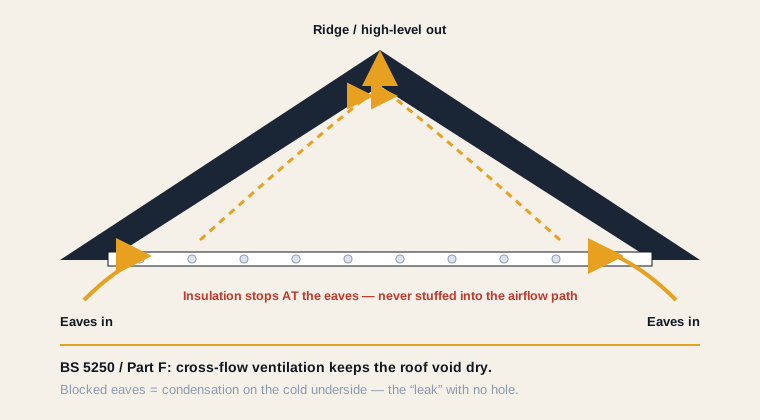
How roof-void ventilation keeps a roof dryFarnham knowledge
Why Farnham Roofs Grow Moss
Farnham is a moss town, and the reason is its setting. The Wey valley holds moisture, the mature tree cover across so much of the area keeps roofs shaded and slow to dry, and the combination creates exactly the damp, sheltered conditions moss thrives in. North-facing slopes and the roofs along the heavily wooded roads — The Bourne, Frensham Road, and the streets running towards Tilford — are the worst affected, often carrying thick moss growth that lifts tile edges and sheds debris into the gutters below.
The tile type matters too. The older, more porous concrete tiles on the post-war estates in Heath End, Badshot Lea and Weybourne hold moisture at the surface and grow moss readily as they age and carbonate. The smoother clay and slate on Farnham’s period properties resists it better, though shaded aspect still tells. Because moss holds water against the tile and washes into the valleys and gutters, in Farnham it’s not purely cosmetic — on a shaded, wooded-road roof it genuinely shortens tile life and feeds the autumn gutter blockages the town is prone to.
This local pattern also means moss comes back faster here than in drier, more open places. Our biocide suppresses regrowth for three to five years, but on a deeply shaded roof towards the wooded roads, the shorter end of that range is realistic — and a roof that’s cleared and treated once benefits from an occasional repeat rather than being left to regrow completely.
The process
What to Expect: Moss Removal in Farnham
1. Assessment
We look at how established the moss is, the tile type and condition, and whether removal is genuinely needed or the roof can wait — an honest steer, not an automatic sale.
2. Manual removal
We remove the moss by hand and scraper, working down the roof carefully. No pressure washing — ever — because it strips the protective tile surface and forces water under the courses.
3. Biocide treatment
We apply a soft-wash biocide that kills the remaining spores and suppresses regrowth for 3–5 years. It works gradually, so the roof keeps clearing for weeks after we leave.
4. Clear-up
We clear the removed moss from the roof, gutters and ground, so you’re not left with debris blocking the very gutters the moss was threatening.
Timescales
How Long Does It Take?
Job
Typical duration
Moss removal + biocide, semi
Half a day
Full clean, detached
Most of a day
Biocide-only application
2–3 hours
Regrowth suppression
Visible clearing over 4–6 weeks
Biocide needs a dry spell to work into the roof; we time application to the forecast and won’t apply it into imminent heavy rain.
Access
Access, Scaffolding & Permits in Farnham
Moss removal is worked from ladders and roof ladders in most cases, with a tower where a safe standing position is needed on a larger roof. Scaffold is specified for: only on high or steep roofs where safe working time justifies it - always itemised in your written quote, never a hidden extra, and we arrange it.
Farnham’s Georgian and Victorian streets around the town centre have limited frontage and controlled pavement space, so scaffold on the conservation streets needs planning and a permit. Pavement scaffold and skip permits go through Waverley Borough Council; allow a few working days on streets like Castle Street, The Borough, Downing Street where space is tight.
Pricing
What Moss Removal Costs in Farnham
Job
Typical range
Notes
Moss removal + biocide, semi
£400–£800
Manual removal, no pressure washing
Full clean, detached
£600–£1,200
By roof size and moss depth
Biocide treatment only
£250–£500
Where removal isn’t yet needed
Gutter clear add-on
£80–£150
Sensible alongside moss work
Repeat suppression visit
From £200
Every 3–5 years as needed
What moves the price
Roof size, pitch and how established the moss is
Aspect — shaded, north-facing and wooded-road roofs take longer
Tile type and condition
Whether gutters need clearing of the shed debris too
Worked example: A north-facing 1960s semi in Heath End with heavy moss, manually cleared and biocide-treated with the gutters cleared of the fallen debris: £620, expected to stay clear for around 3–4 years given the shaded aspect.
No deposit and nothing payable up front. Full payment on completion. Repeat suppression visits quoted separately as and when needed.
Covering GU9, GU10 and surrounding postcodes.
Guarantee
Your Guarantee, Explained
Our workmanship is covered for 10 years, and the biocide treatment is expected to suppress regrowth for 3–5 years depending on your roof’s aspect and surroundings.
Covered: workmanship for 10 years, in writing, transferable if you sell.
On top: manufacturer warranties on materials (terms vary by product).
Not covered: storm or impact damage - that is an insurance matter, and we will document it for your claim.
If a fault appears in covered work, we come back and put it right. No quibbling, no re-charge.
NFRC maintenance guidance and HSE work-at-height rules both caution against pressure washing tiled and slated roofs, as high-pressure water damages the weathered tile surface and creates avoidable safety and water-ingress risks; soft methods are recommended instead.Source: NFRC / HSE
Roof looking green and tired? Get it cleaned the right way.
Moss removal is external and low-disruption — some noise from the scraping and a temporary scatter of moss debris, which we clear before we leave. You don’t need to be home. You do not need to stay home for external work - we just need power and access agreed in advance.
Removal runs year-round, but biocide is applied in dry weather so it can penetrate before rain washes it off. The Wey valley holds autumn moisture, and Farnham’s heavy tree cover slows drying and blocks gutters through the leaf-fall months.
Reviews
What Farnham Homeowners Say
★★★★★
"Our north-facing roof near Frensham Road was thick with moss and shedding it all into the gutters. They scraped it off by hand, treated it, and cleared the gutters. Explained exactly why they’d never pressure wash it. Roof’s stayed clear."
Linda H. · The Bourne, Farnham
★★★★★
"Wanted the roof cleaned before selling. They talked me out of the pressure wash a mate had suggested — said it’d wreck the tiles — and did it properly with scrape and biocide instead. Looked great for the photos and no damage done."
Kevin M. · Weybourne, Farnham
★★★★★
"Honest from the start: said half the moss could wait and only treated what needed it, rather than charging for the lot. The biocide’s kept it clear for three years now. That kind of straight dealing is why I’d use them again."
Susan T. · Badshot Lea, Farnham
FAQ
Frequently Asked Questions
Moss removal with biocide treatment is £400–£800 for a typical semi and £600–£1,200 for a detached, depending on roof size and how established the moss is. Biocide-only treatment, where full removal isn’t yet needed, is £250–£500. Clearing the gutters of shed debris adds £80–£150.
No, and we’d strongly advise against anyone who offers to. Pressure washing a tiled or slate roof strips the protective surface off the tiles, forces water under the courses, and spreads spores across the whole roof. We remove moss by hand and treat with biocide instead — effective without the damage.
Our biocide suppresses regrowth for around 3–5 years. On Farnham’s shaded, wooded-road and north-facing roofs the shorter end is realistic because conditions favour regrowth; on more open, sunnier roofs it lasts longer. An occasional repeat visit keeps it clear long-term.
It can be. Thick moss holds moisture against the tile surface, lifts tile edges, and washes into valleys and gutters causing blockages — all of which matter in a damp, tree-heavy area like Farnham. A light dusting on a sound roof is cosmetic, though, and we’ll tell you honestly which yours is.
We recommend it, and offer it as an add-on. Removing moss without clearing the gutters just leaves the shed debris blocking them — which in Farnham, with its heavy leaf fall on top, is asking for a winter overflow. Doing both together is the sensible approach.
Biocide is applied in dry weather so it can penetrate before rain washes it off, and it then works gradually over several weeks. We time application to the forecast. Removal itself can be done year-round; we simply plan the biocide around a dry spell.
Manual removal clears the bulk immediately, but the biocide keeps working for weeks afterwards — so the roof continues to clear and lighten for four to six weeks after we leave as the treated moss dies back and weathers off. It’s a gradual finish, not an instant blast.